
Stock, Broth, and Glace: What’s the Difference?
When a recipe calls for stock, broth, or glace, it can be easy to assume these ingredients are interchangeable. While all three add flavour and depth to food, they are made differently and serve different purposes in the kitchen.
The main difference between stock, broth, and glace is concentration and purpose. Stock is generally made by simmering bones and vegetables to create a flavourful cooking base. Broth is typically made from meat and vegetables and is seasoned enough to enjoy on its own. Glace is a highly concentrated reduction made by slowly reducing stock until it becomes rich, intensely flavoured, and often syrupy or gelatinous when chilled.
Understanding these differences can help you choose the right ingredient for sauces, soups, gravies, braises, and other dishes.
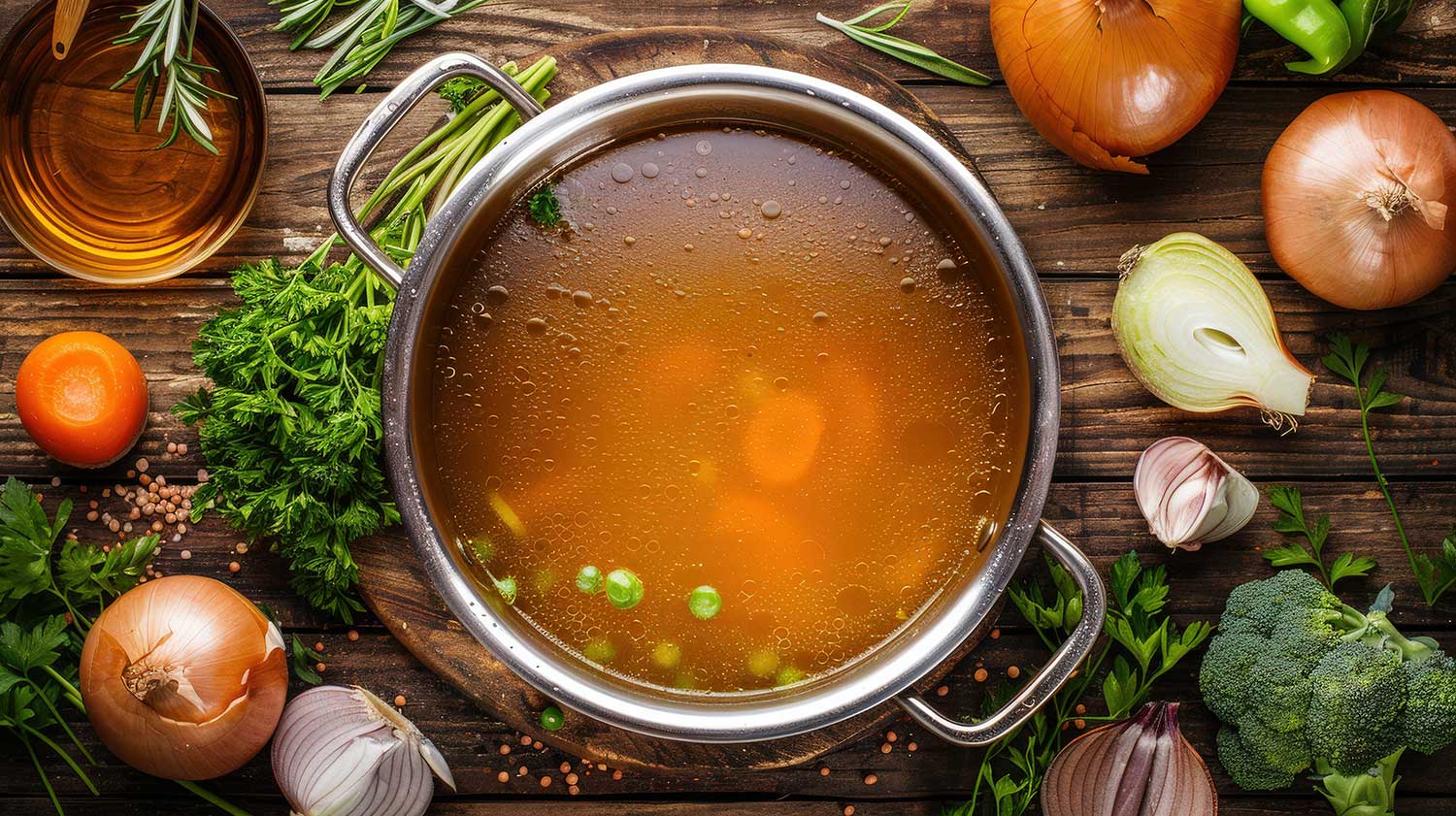
What Is Stock?
Stock is a foundational ingredient in professional and home cooking. It is traditionally made by simmering bones, vegetables, aromatics, and water for an extended period.
The bones are particularly important because they contain collagen, which can break down during cooking and contribute body and richness to the finished stock.
Common types include:
- Chicken stock
- Beef stock
- Veal stock
- Fish stock
- Vegetable stock
Stock is usually less heavily seasoned than broth. This makes it versatile because it can be reduced or incorporated into recipes without adding excessive salt.
How Is Stock Used?
Stock is commonly used as a building block for other dishes, including:
- Soups
- Sauces
- Gravies
- Risotto
- Braised dishes
- Stews
- Pan sauces
- Stuffing and other savoury recipes
In simple terms, stock is a versatile flavour foundation.
What Is Broth?
Broth is generally made by simmering meat, poultry, vegetables, herbs, and aromatics in water. Unlike stock, broth is often seasoned and is commonly prepared to be enjoyed as a finished food rather than simply used as a cooking base.
For example, chicken broth can be served on its own as a comforting soup or used as the liquid in another recipe.
Broth can contain meat, while traditional stock relies more heavily on bones for collagen and body.
How Is Broth Used?
Broth is ideal for:
- Soups
- Drinking on its own
- Cooking rice and grains
- Adding moisture to recipes
- Pasta and noodle dishes
- Sauces
- Braises
- Casseroles
Because broth is often seasoned, it is important to consider its salt level when adding it to a recipe.
What Is Glace?
Glace is the most concentrated of the three.
Glace is made by slowly reducing stock until much of the water has evaporated and the flavour becomes highly concentrated. The result is a rich, intensely savoury ingredient that can dramatically enhance sauces and other dishes.
Traditional examples include meat-based glaces such as beef or veal glace.
Because glace is so concentrated, only a relatively small amount may be needed to add significant depth of flavour.
When chilled, a properly prepared glace can become firm or gelatinous because of the concentrated collagen and gelatin from the original stock.
How Is Glace Used?
Glace is particularly useful for:
- Finishing sauces
- Pan sauces
- Gravies
- Demi-glace
- Braised meats
- Restaurant-style reductions
- Adding depth to stews
- Enhancing savoury dishes
Think of glace as a flavour concentrate rather than a replacement for a large quantity of cooking liquid.
Stock vs Broth vs Glace
The easiest way to understand the difference is to look at their primary purpose.
Stock
Typically Made from: Bones, Vegetables & Aromatics
Concentration: Moderate
Main Purpose: Cooking Base
Broth
Typically Made from: Meat, Vegetables & Aromatics
Concentration: Moderate
Main Purpose: Soup, Drinking & Cooking
Glace
Typically Made from: Reduced stock
Concentration: Very High
Main Purpose: Flavour concentrate and sauce enhancement
The biggest distinction is that glace is essentially a concentrated reduction of stock, whereas broth and stock are generally used in larger quantities.
Is Glace the Same as Demi-Glace?
No. Although the terms are sometimes confused, glace and demi-glace are not exactly the same thing.
Glace is a highly reduced stock. Demi-glace is traditionally a sauce preparation made using brown stock and espagnole sauce, followed by reduction.
Modern culinary products can vary in formulation, so it is always useful to check the specific product or recipe instructions.
Can You Substitute Stock, Broth, and Glace?
Sometimes, but the substitution is not always one-to-one.
Substituting Broth for Stock
Broth can generally be substituted for stock in many recipes. However, broth may contain more salt, so you may need to adjust the seasoning.
Substituting Stock for Broth
Stock can also replace broth, particularly in soups and sauces. You may simply need to add seasoning to achieve the desired flavour.
Substituting Glace for Stock or Broth
Glace is different because it is much more concentrated. It should generally be used in small quantities and diluted with water or another liquid when a recipe requires a larger amount of stock or broth.
For example, adding a small amount of glace to a pan sauce can provide the deep, savoury character that would otherwise require a much larger quantity of stock.
Which One Should You Use?
The best choice depends on what you are trying to accomplish.
Use stock when:
You need a versatile, relatively neutral cooking base for soups, sauces, risotto, braises, or other recipes.
Use broth when:
You want a more finished, seasoned liquid that can be enjoyed on its own or used in everyday cooking.
Use glace when:
You want to intensify flavour, enrich a sauce, or add concentrated savoury depth without adding a large amount of liquid.
Why Glace Is Popular in Professional Cooking
One reason glace is valued by chefs is its ability to deliver concentrated flavour and richness in a small amount.
Instead of adding a large quantity of liquid and then reducing it during cooking, a prepared glace can provide much of that concentrated character immediately. This can be especially useful when preparing sauces, gravies, or finishing dishes.
For home cooks, it can also be a convenient way to bring greater depth to everyday meals.
Frequently Asked Questions
What is the difference between stock and broth?
Stock is traditionally made with bones and is valued for its body and gelatin, while broth is generally made with meat and vegetables and is often seasoned enough to serve on its own.
What is the difference between stock and glace?
Glace is made by reducing stock until it becomes highly concentrated. Stock is a cooking liquid, while glace is primarily used as a concentrated flavour enhancer.
Is glace stronger than stock?
Yes. Glace is significantly more concentrated than stock because much of the liquid has been removed during the reduction process.
Can I use glace instead of broth?
Yes, but because glace is highly concentrated, it should usually be diluted before being used as a direct replacement for broth.
Is broth or stock better?
Neither is universally better. Stock is often preferable when you want a flexible cooking base, while broth is convenient when you want a seasoned liquid that can be enjoyed on its own or incorporated directly into a recipe.
Does glace need to be refrigerated?
Once opened or prepared, glace should be stored according to the product’s instructions. Homemade glace should be cooled promptly and refrigerated or frozen for longer storage.
The Bottom Line
Stock, broth, and glace all have an important place in cooking, but they are designed for different purposes.
Stock provides a versatile foundation, broth provides a flavourful cooking liquid, and glace delivers concentrated flavour and richness.
Knowing when to use each one can help you create more flavourful soups, sauces, gravies, braises, and other dishes. Whether you’re cooking a simple weeknight meal or developing a more refined sauce, choosing the right base can make a noticeable difference.
At EQ Foods, understanding the ingredients behind great flavour is part of creating better food. Knowing the difference between stock, broth, and glace is a simple step toward getting more from every recipe. Check our products for more information.